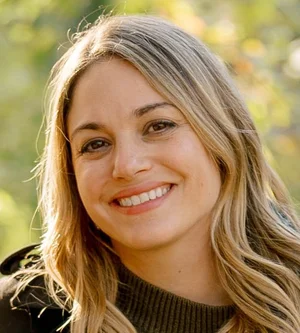

How Aerial Candy opened a second studio
Most aerial studios never open a second location. Not because the ambition isn't there, but because the first location is consuming enough — the rigging, the scheduling, the community-building, the constant balancing act of keeping classes full while keeping the culture intact. When Aerial Candy's founder Candace Cantu decided to expand from her original home inside Takoma Park's Dance Exchange into a second standalone location across state lines in Merrifield, Virginia, she did something most studio owners only daydream about.
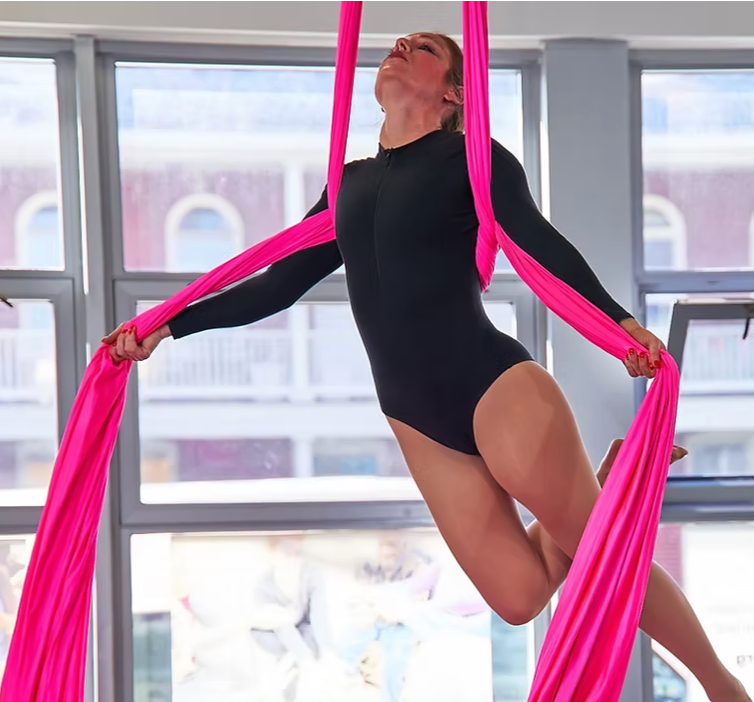
Aerial Candy opened in March 2019 aerialcandyfit, establishing itself as an aerial and circus arts school operating within the Dance Exchange — a smart low-overhead way to build a student base before committing to independent space. Established in 2019, the studio offers classes for both adults and children 6 and up in what Cantu calls "circus arts," including aerial hoops and silks — the kinds of acrobatics you might see at Cirque du Soleil. FFXnow
The leap across state lines
By 2023, the Takoma Park operation had grown to the point where kids' sessions were consistently filled to capacity. Rather than try to expand within an already-occupied shared space, Cantu looked south. She found an industrial space at 2801 Merrilee Drive in Fairfax that was being used for storage, and set about transforming it into a proper aerial studio. FFXnow The location logic was personal as much as strategic — Cantu told a local outlet that she wanted something more central, right off 495 and 66, next to the Metro, and close to DC: "I actually live in Virginia. I wanted something kind of more central, a little bit more of like a hub where it's easier to have access to." FFXnow
The studio was on track to open in November 2023 FFXnow, and the website later confirmed a February 18th opening date — putting the Merrifield location at roughly four to five years after the original. That's a meaningful data point for any studio owner watching. It suggests Cantu wasn't rushing the expansion; she let the first location mature, build reputation, and fill up before adding the complexity of a second site.
Two locations, one pass
One of the more interesting operational decisions Aerial Candy made was keeping the student experience unified across both sites. Class passes and memberships are valid at either location FFXnow — which lowers the friction for students who might live or work closer to one than the other, and signals that this is genuinely one business rather than two separate studios sharing a name.
The Merrifield location runs about 3,000 square feet with slightly higher ceilings than Takoma Park aerialcandyfit, and carries its own distinct energy — more classes overall, a new instructor team, and disciplines that weren't part of the original offering, including aerial chains, straps, and contortion. Eddie Danger, who teaches straps, chains, sling, and flexibility at Merrifield, brings a competition background that includes six gold, two silver, and one bronze medals across a variety of aerial competitions. aerialcandyfit That's the kind of hire that raises the ceiling — literally and otherwise — for what students at a community-focused studio can aspire to.
The performer-to-owner pipeline
Candace Cantu's path to studio ownership runs through the stage. An award-winning performer, she has a solo residency at The Ringling in Sarasota, Florida to her name, with a diverse background spanning hair hang, acro-pole, fire, and all aerial arts. aerialcandyfit She also founded Candescent Talent, a sister company that provides performers — aerialists, contortionists, fire dancers, stilt walkers — for events. It's a model that other performer-turned-owner types will recognize: the performance work feeds the teaching credibility, and the teaching operation creates a pipeline of trained students who eventually become performers themselves.
What the expansion signals
For studio owners, Aerial Candy's story is less about size and more about sequencing. Start embedded in a larger arts organization to reduce early risk. Build your community and fill your classes. Then, when you're turning students away, use that as the signal — not the ambition — to expand. Find a location that solves a genuine access problem for your audience. Bring your community with you by making passes transferable. Hire instructors who elevate the offering rather than simply staff it.
As Cantu put it ahead of the opening: "I'm just really excited about meeting all the people in the area. I'm really excited about building a community." FFXnow That instinct — to see expansion as community-building rather than just growth — is probably why it worked.